
Music hums faintly in the background as I wait for my flight. Planes stand still in the distance, passengers form quiet lines at the gate, and the security area hums with urgency – bags opening, footsteps shuffling, voices rising and fading. Amidst this choreography of motion, a strange stillness takes hold of me.
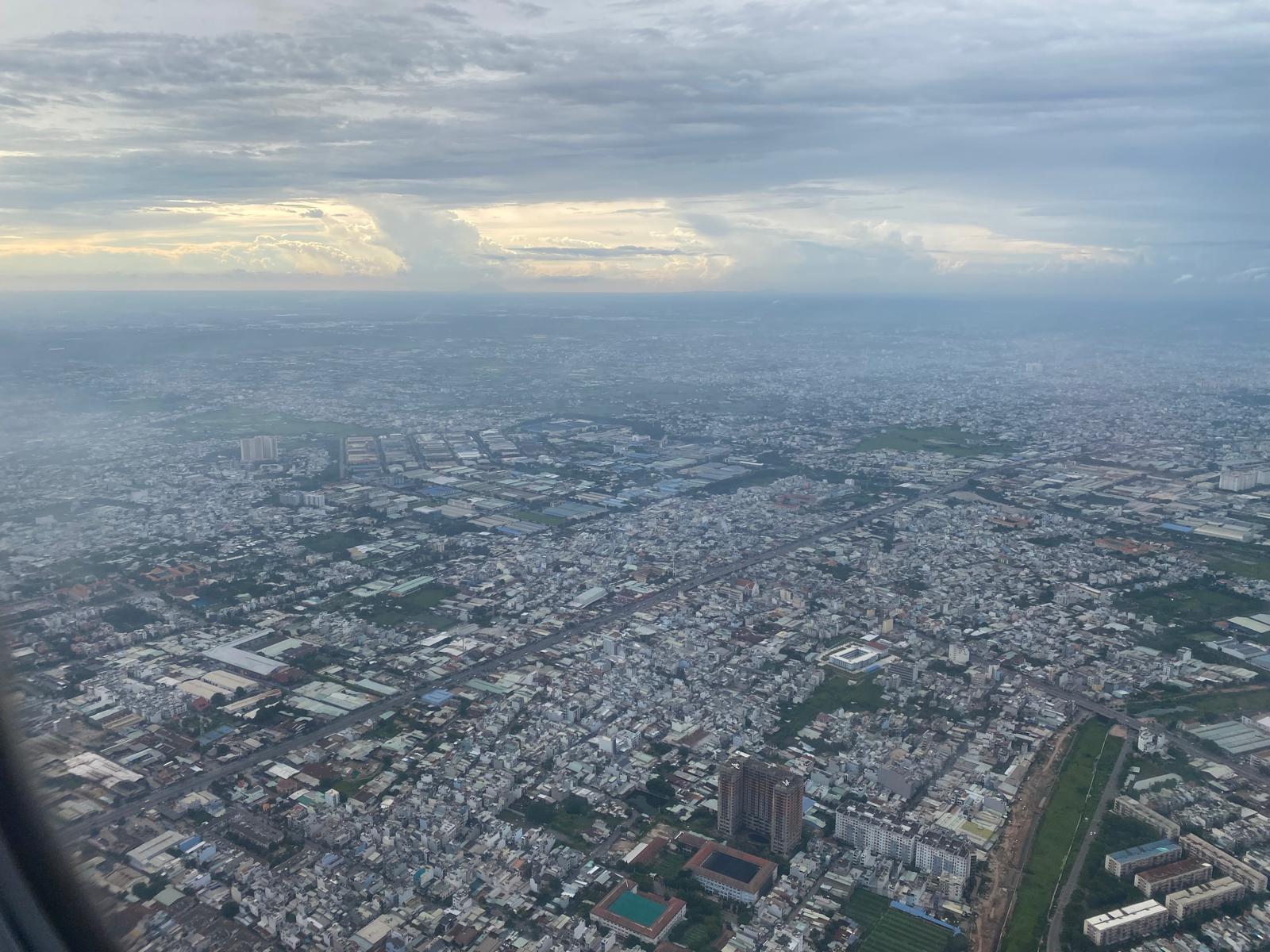
Unlike trains or buses bound to the earth, a plane lifts us into a realm once reserved only for birds and dreams. To pierce through clouds, to gaze down upon oceans and lands from above – it is both ordinary and miraculous. Ordinary, because for many it is just another commute, a routine. Miraculous, because for countless others, a ticket remains an unattainable luxury, a domestic plane ticket can cost the equivalent of an entire regional minimum monthly wage in Vietnam. Somewhere, children in remote villages look skyward at a silver speck drifting across the blue and dare to imagine a life beyond their horizon. Airplanes are not merely machines; they are vessels of hope, carrying the weight of what might be.
Yet if airports are places of hope, they are equally arenas of parting. Lovers cling to each other at the edge of departure, a kiss pressed gently on a forehead, a whispered vow to meet again. Across the hall, young men from quiet villages shoulder the burden of exile, stepping into years of solitude in foreign lands. Their sacrifice is heavy but silent: trading their own nearness to family for the promise of bread on the table, warmth in the home.
And then there is the student, freshly unmoored from the embrace of her parents, standing at the threshold of independence. Her parents, eyes wet with tears, whisper reminders that blend care with fear. She may have grown, but in their gaze she remains a fragile child, stepping into a vast and uncharted world.
Airports are more than terminals of travel. They are thresholds – where dreams take flight, where hearts are tested by distance, where the future begins and the past lingers just behind the glass.
